Skip to Content
PsyDPrograms

2027 Edition

Find a Program

Best PsyD Programs in Virginia (2027)

Entry to the ranking takes current APA accreditation and a start open to new students, and four PsyD programs in Virginia have both. James Madison University in Harrisonburg, Virginia leads Virginia with 78.4 out of 100, 3rd among all ranked PsyD programs nationally.

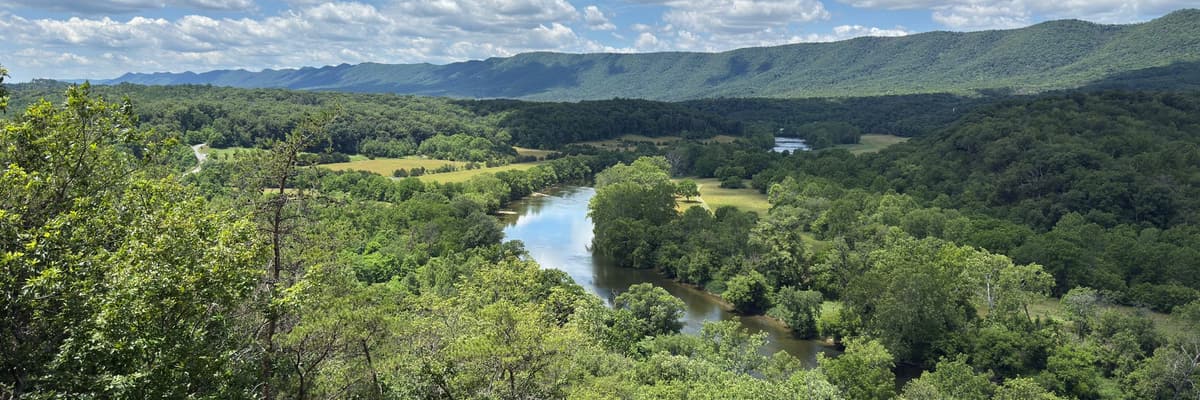
The Shenandoah River winding through green forest with the Blue Ridge Mountains beyond, in Virginia. The photograph opens the ranking of PsyD programs in Virginia.

By APA area of accreditation, that is 3 clinical and 1 combined clinical and school programs. James Madison University is the one public university among them.

Virginia’s accreditation test tightens on June 23, 2028, when a doctorate from an APA-, CPA- or board-accepted accredited program in clinical, counseling or school psychology becomes the standard. BLS reports a median of $86,520 for clinical and counseling psychologists in Virginia (May 2025), against $100,580 nationwide.

PsyD Programs in Virginia at a Glance

  • Four PsyD programs in Virginia are ranked. Each holds current APA accreditation and takes new students, and James Madison University is first in Virginia at 3rd nationally. How the programs are scored.
  • Virginia requires an accredited doctorate in clinical, counseling or school psychology from June 23, 2028. Candidates complete an internship plus a residency of at least 1,500 hours.
  • Clinical and counseling psychologists in Virginia earn a median of $86,520. That is BLS pay for SOC 19-3033 in May 2025, with the 10th to 90th percentile running from $41,990 to $176,080.
  • The median first-time EPPP pass rate is 79%. It is the median across the three programs with a published ASPPB rate, against 75% for all accredited doctoral programs.
  • APA lists Liberty University as “Accredited, on contingency”. Its card shows that exact status.

Top PsyD Programs in Virginia

All four ranked PsyD programs in Virginia, in order. The number on each card is its place in Virginia, and its national rank is beside the school.

Rank 2

Regent University’s page for the Psy.D. in Clinical Psychology

Virginia Beach, VA · Clinical Psychology · No. 67 nationally · On campus

52.8

$37,765
first-year cohort, 2026-2027
62%
63 first-time takers
91%
78 of 86 applicants
5
2025-2026 graduates

Ranks 2nd: it registers about 17 students a year in the APPIC internship match (the most in Virginia), and it publishes tuition of $37,765 for the first-year cohort.

Factor scores, out of 10

  • Cost 4.3
  • Earnings 5.5
  • Completion 2.0
  • Outcomes 5.5
  • Track record 5.8
  • Credential 10.0
  • Reputation 6.1

Regent University's on-campus Psy.D. in Virginia Beach, Virginia, builds the integration of psychology and a Christian worldview into every course and a four-course sequence, within a fixed, full-time cohort progression whose first two years of training are on campus, often in its Psychological Services Center.

Read More on Regent University Show less on Regent University

Regent's Doctor of Psychology (Psy.D.) in Clinical Psychology educates students in a broad and general clinical practitioner-scholar model for careers in health service psychology and in the integration of psychology and a Christian worldview; its handbook describes integration objectives in each course and a four-course, 13-credit sequence covering topics such as a survey of Christianity, the psychology of religion and clinical integration. It is a fixed, full-time, five-year course of study of 116 credit hours beyond the bachelor's degree, taken in a cohort with classes year-round for four years (12 credit hours in each fall and spring term) and a full-time internship in the final year; many students extend their study to six years, and students should expect to relocate for the internship year. Clinical training in the first two years takes place on campus, often in the university's Psychological Services Center, and in the third and fourth years students are typically placed off campus in community settings. Students propose a dissertation in the spring of the third year, take the Comprehensive Examination at the end of that summer to enter doctoral candidacy, and finish with a 2,000-hour internship and the dissertation project.

Applicants need a B.A. or B.S. from a regionally accredited college or university; those whose degree is in a different discipline need at least 18 semester hours of psychology, every applicant needs at least three semester hours of statistics or research methods, and the minimum GPA is 3.0 for undergraduate work or 3.5 for master's-level work. Most enrolled students do not hold a master's degree, and students who complete 64 credit hours and the required practica series can receive a nested Master of Arts in Clinical Psychology. Admission is for the fall semester only, with a priority deadline of November 16, 2026, and a final deadline of January 4, 2027; two recommendations are required, one from a faculty member and one from clergy or a professional, and interviews are by invitation only, with virtual faculty interviews ahead of an on-campus Admissions Weekend in Virginia Beach, Virginia, usually in February. The school offers Psy.D.-specific scholarships, among them academic merit, community impact, first generation and Christian leadership awards, and teaching assistantships for students in their second year or beyond, whose application includes an agreement to the statement of faith. Regent says the degree is designed to fulfill the typical training program requirements for licensure as a psychologist in various U.S. and Canadian jurisdictions; licensure is granted by each jurisdiction's board.

  • The program totals 116 credit hours beyond the bachelor's degree.
  • Full-time enrollment in a fixed cohort progression is required.
  • A four-course, 13-credit sequence covers the integration of psychology and Christianity.
  • Clinical training in the first two years takes place on campus, often in the Psychological Services Center.
  • Admission is for the fall semester only.
APA area
Clinical Psychology
Program unit
School of Psychology and Counseling
APA number
1133
Accredited since
March 14, 2002
Next site visit
2029
Schedule
full-time
Entry
bachelor's degree
Length
five years, full-time: classes year-round for four years and a full-time internship in the final year
Credits
116 credit hours
Tuition, full-time
$37,765 (first-year cohort, 2026-2027)
University fees
$2,550
EPPP
61.9% of 63 first-time takers passed (ASPPB)
Internship match
78 of 86 applicants matched to an APA- or CPA-accredited internship (APPIC)

Scored under methodology v2.0

Sources: APA record of Regent University (Clinical Psychology), ASPPB, APPIC and APA disclosure of Regent University (Clinical Psychology), read October 12, 2026.

Rank 3

Divine Mercy University’s program page for its Psy.D. in Clinical Psychology

Sterling, VA · Clinical Psychology · No. 72 nationally · On campus

51.2

$44,585
first-year cohort, 2024-2025
79%
43 first-time takers
84%
48 of 57 applicants
6
2024-2025 graduates

Ranks 3rd: it retains 88% of the students who enter, but it publishes tuition of $44,585 for the first-year cohort (the highest in Virginia).

Factor scores, out of 10

  • Cost 3.0
  • Completion 3.5
  • Outcomes 7.0
  • Track record 4.4
  • Credential 10.0
  • Reputation 2.4

Divine Mercy University's in-person Psy.D. in Clinical Psychology follows a modified practitioner-scholar model and adds 12 credit hours of integrative studies in philosophy and theology, with clinical practice from a Catholic integrative perspective as one of its program goals.

Read More on Divine Mercy University Show less on Divine Mercy University

The program adopts a modified version of the practitioner-scholar model, and its goals run from foundations in psychological science and research to clinical practice from a Catholic integrative perspective. Its 122 semester credit hours divide into 101 credit hours of psychology, 12 of integrative studies in philosophy and theology and at least 9 of dissertation research, designed for five years of full-time study: four years of academic coursework on campus and one year at a pre-doctoral internship site. Students begin clinical training at the Catholic University of America Counseling Center and continue in secular and nonsecular off-site settings, take comprehensive exams at the end of the third year, and complete 2,000 hours in an APPIC-member pre-doctoral internship. The dissertation, which must be successfully defended, can be a critical review and analysis of a topic in psychology or original theoretical or empirical research.

Applicants need an undergraduate degree, preferably in psychology, and students admitted without a psychology degree complete prerequisite courses in their first year; GRE scores are required of all applicants, and the in-person group interview takes place on the university's campus in Sterling, Virginia. The school describes the Psy.D. as an on-site, in-person program, and students must be enrolled full time throughout. Merit scholarships are offered to a limited number of incoming students. The school says the 122 semester credit hour program is designed to meet the educational requirements for licensure in all U.S. states and territories and the provinces of Canada; licensure itself is granted by each jurisdiction's psychology board.

  • The program totals 122 semester credit hours, including 12 in integrative studies in philosophy and theology.
  • Students must be enrolled full time throughout the program.
  • GRE scores are required of all applicants.
  • The internship is 2,000 hours at an APPIC-member site.
  • Clinical training begins at the Catholic University of America Counseling Center.
APA area
Clinical Psychology
Program unit
The Institute for the Psychological Sciences
APA number
1753
Accredited since
April 22, 2016
Next site visit
2036
Schedule
full-time
Entry
bachelor's degree
GRE
required
Length
five years of full-time study: four years of academic coursework on campus and one year at a pre-doctoral internship site
Credits
122 semester credits
Tuition, full-time
$44,585 (first-year cohort, 2024-2025)
University fees
$2,590
EPPP
79.07% of 43 first-time takers passed (ASPPB)
Internship match
48 of 57 applicants matched to an APA- or CPA-accredited internship (APPIC)

Scored under methodology v2.0
Sources: APA record of Divine Mercy University (Clinical Psychology), ASPPB, APPIC and APA disclosure of Divine Mercy University (Clinical Psychology), read October 14, 2026.

Rank 4

Liberty University’s Clinical Psychology program page for the Psy.D.

Lynchburg, VA · Clinical Psychology · No. 117 nationally · On campus

  • Accredited, on contingency

19.0

$39,600
first-year cohort, 2026-2027
0%
0 of 12 applicants; 10 matched elsewhere, 1 withdrew; 2025 Match only
4
2025-2026 graduates

Ranks 4th: it registers about 12 students a year in the APPIC internship match, but it retains 74% of the students who enter (the lowest in Virginia).

Factor scores, out of 10

  • Cost 3.9
  • Earnings 0.0
  • Completion 0.8
  • Outcomes 0.1
  • Track record 4.6
  • Credential 5.0
  • Reputation 0.3

Liberty University's residential Psy.D. in Lynchburg, Virginia, integrates clinical training with a Christian worldview, awards a Master of Arts in Clinical Psychology about halfway through, and ends with a 2,000-hour internship in the fifth year.

Read More on Liberty University Show less on Liberty University

Liberty's Doctor of Psychology in Clinical Psychology (Psy.D.), offered through its Center for Professional and Clinical Psychology, is a full-time, residential program of 126 credit hours that integrates science, practice and the Christian faith; alongside training in psychological testing and assessment, diagnosis and treatment planning, evidence-based psychotherapy, and supervision and consultation, the course list includes Applied Theology for Clinical Psychologists (PSYD 755). The degree completion plan runs five years, four academic and practicum years and a final internship year, and students are awarded an M.A. in Clinical Psychology about halfway through. Most students begin clinical work in their second year, with at least 15 hours a week of clinical activities in the fall and spring semesters and 20 hours a week on site over the following two years, at sites in and around Lynchburg, VA, that include outpatient clinics, partial hospitalization and acute psychiatric units for adults and children, and residential addiction programs. The program provides a minimum of 1,200 hours of supervised practicum, and every student completes a quantitative research-based dissertation and a one-year, 2,000-hour internship.

Applicants need a bachelor's degree from a regionally accredited college or university with a GPA of at least 3.0, at least 18 semester hours of psychology in set areas (finished before the second semester of the program), three letters of recommendation, a statement of purpose of 500 to 700 words and a faculty interview. The GRE is not required, though applicants are strongly encouraged to take it. Up to 39 credit hours may transfer in, the degree must be completed within seven years, and the handbook expects students to live within one hour of the university. Liberty's graduate assistantships, in academic or administrative support roles, carry a tuition scholarship equivalent to a full-time course load for the students selected. Liberty says the program prepares students for state licensure as a clinical psychologist; licensure itself is granted by each state's psychology board.

  • The program totals 126 credit hours.
  • The program is residential only, with no online or hybrid track.
  • The first cohort began in the spring semester of 2021.
  • Students are awarded an M.A. in Clinical Psychology about halfway through the degree plan.
  • Up to 39 credit hours may transfer into the program.
APA area
Clinical Psychology
Program unit
Psychology Department, Psy.D. program
APA number
2659
Accredited since
October 22, 2025
Schedule
full-time
Entry
bachelor's degree
GRE
optional
Length
five years: four academic and practicum years and a final year of internship
Credits
126 credit hours
Tuition, full-time
$39,600 (first-year cohort, 2026-2027)
University fees
$980
Internship match
0 of 12 applicants matched to an APA- or CPA-accredited internship (APPIC)

Scored under methodology v2.0

Sources: APA record of Liberty University (Clinical Psychology), APPIC and APA disclosure of Liberty University (Clinical Psychology), read October 14, 2026.

The Numbers Behind the Virginia Ranking

The figures below come from the four PsyD programs in Virginia that this ranking includes, each read from the source named beside it.

  • 4

    APA-accredited PsyD programs ranked in Virginia

    APA directory
  • 79%

    Median first-time EPPP pass rate across 3 programs

    ASPPB
  • 87%

    Median accredited internship match rate across 4 programs

    APPIC
  • $38,683

    Median yearly tuition across 4 programs

    Program disclosures

Across the three programs with a published first-time EPPP pass rate, results run from 62% to 91%, with a median of 79%. ASPPB reports 75% for all accredited doctoral programs.

The four programs with at least 10 APPIC registrations from 2021 to 2025 matched 0% to 96% of their registered applicants with APA- or CPA-accredited internships, with a median of 87%.

Four programs list a yearly tuition, from $0 to $44,585, with a median of $38,683. Each figure is the full-time yearly tuition in the program’s own cost table. James Madison University lists $0 because it waives tuition for every admitted student.

ASPPB adds its own caution: “Please note that care should be exercised if comparisons across schools and programs are made.”

Psychologist Licensure in Virginia

A PsyD is a degree, and the license comes from the state. These are the rules a graduate of PsyD programs in Virginia meets for a license there, each linked to the page it was read on.

Licensing questionVirginia’s answer
Doctoral degree and accreditation
A doctorate in clinical, counseling or school psychology, from a program accredited by APA, CPA or an accreditor the board accepts, required from June 23, 2028Before June 23, 2028, an applicant can also qualify with a doctorate from a professional psychology program that meets the board’s criteria. Source: 18VAC125-20-54, read October 14, 2026
Supervised experience
An internship, plus a residency of at least 1,500 hours over 12 months to three yearsDoctoral practicum hours completed before the internship can cover all or part of the residency. Internship hours cannot. Source: 18VAC125-20-65, read October 14, 2026
Licensing examination
EPPP Part 1 (Knowledge) Source: Virginia Board of Psychology, examination information, read October 14, 2026

Licensing board: Virginia Board of Psychology.

Psychologist Pay in Virginia

BLS counts 2,140 clinical and counseling psychologists in Virginia, with a median annual wage of $86,520. School psychologists number 1,200 at a median of $85,670.

Clinical and Counseling Psychologists in Virginia

$86,520

Median annual pay for clinical and counseling psychologists in Virginia

  • BLS OEWS, May 2025
10th percentile
$41,990
25th percentile
$61,130
75th percentile
$110,990
90th percentile
$176,080

Occupation: Clinical and Counseling Psychologists, SOC 19-3033.BLS counts 2,140 employed in Virginia.

Clinical and Counseling Psychologists Pay by Area in Virginia

Median annual pay for clinical and counseling psychologists in Virginia and its metropolitan and nonmetropolitan areas, BLS May 2025
AreaMedian annual pay
Virginia statewide 2,140 employed $86,520
Roanoke, VA 60 employed $104,300
Washington-Arlington-Alexandria, DC-VA-MD-WV 1,550 employed $101,670
Virginia Beach-Chesapeake-Norfolk, VA-NC 420 employed $91,010
Staunton-Stuarts Draft, VA 40 employed $89,670
Charlottesville, VA 90 employed $86,540
Harrisonburg, VA 40 employed $85,710
Southside Virginia nonmetropolitan area 50 employed $84,990
Richmond, VA 290 employed $72,880

School Psychologists in Virginia

$85,670

Median annual pay for school psychologists in Virginia

  • BLS OEWS, May 2025
10th percentile
$63,130
25th percentile
$77,550
75th percentile
$106,550
90th percentile
$132,800

Occupation: School Psychologists, SOC 19-3034.BLS counts 1,200 employed in Virginia.

School Psychologists Pay by Area in Virginia

Median annual pay for school psychologists in Virginia and its metropolitan and nonmetropolitan areas, BLS May 2025
AreaMedian annual pay
Virginia statewide 1,200 employed $85,670
Washington-Arlington-Alexandria, DC-VA-MD-WV 1,590 employed $106,550
Virginia Beach-Chesapeake-Norfolk, VA-NC 230 employed $86,510
Richmond, VA 150 employed $82,440
Charlottesville, VA 30 employed $80,900
Roanoke, VA 60 employed $75,550

Percentiles are points in each occupation’s pay distribution, not experience levels. BLS lists an area in every state its counties reach, so a metropolitan area that crosses a state line appears under each state.

Programs APA Lists in Virginia That Are Not Ranked

APA lists this program in Virginia, and it is not ranked. The statement is quoted below with the page it was read on.

Questions About a PsyD in Virginia

Which Is the Best PsyD Program in Virginia?

In the 2027 ranking, James Madison University in Harrisonburg, Virginia is first among the PsyD programs in Virginia, with a score of 78.4 out of 100 and 3rd place nationally. Its program page is James Madison University’s Psy.D. doctoral program in Clinical and School Psychology. The score weighs cost, graduate earnings, completion, internship and licensure outcomes, track record, credential alignment and program reputation, and the methodology page shows each weight.

What Does a PsyD Cost in Virginia?

Four ranked programs in Virginia list a yearly tuition, from $0 to $44,585, with a median of $38,683. Each figure is the full-time yearly tuition in the program’s own cost table. James Madison University lists $0 because it waives tuition for every admitted student. A program card labels its tuition figure with the period and rate its school printed, and Read More lists the in-state and out-of-state prices where the cost table gives both.

Does Virginia Require an APA-Accredited PsyD?

Not before June 23, 2028. Until then, 18VAC125-20-54 also lets an applicant qualify with a professional psychology doctorate that meets the board’s criteria. From that date the doctorate must come from a program accredited by APA, CPA or an accreditor the board accepts.

How Does the Virginia Residency Work for Psychologists?

Virginia asks for a residency of at least 1,500 hours, over 12 months to three years, on top of an internship in a program accredited by APA or CPA, an APPIC or ASPPB and National Register member, or one meeting equivalent standards. Doctoral practicum can cover all or part of the residency, and internship hours cannot.

Which Exam Does a Virginia Psychologist Take?

EPPP Part 1 (Knowledge), according to the board’s examination information page. A candidate must pass the final required step within two years before licensure.

What Do Psychologists Earn in Virginia?

BLS reports a median annual wage of $86,520 for clinical and counseling psychologists (SOC 19-3033) in Virginia for May 2025. The 10th percentile is $41,990 and the 90th is $176,080. School psychologists (SOC 19-3034) have a median of $85,670. Percentiles mark points in the pay distribution of everyone in the occupation, not years of experience.

Sources for Virginia PsyD Programs