Skip to Content
PsyDPrograms

2027 Edition

Find a Program

Best PsyD Programs in New Jersey (2027)

Six PsyD programs in New Jersey clear the entry bar of current APA accreditation and a start open to new students. First in New Jersey is Rutgers, The State University of New Jersey in Piscataway, New Jersey, which scores 73.5 out of 100 and stands 7th on the national list.

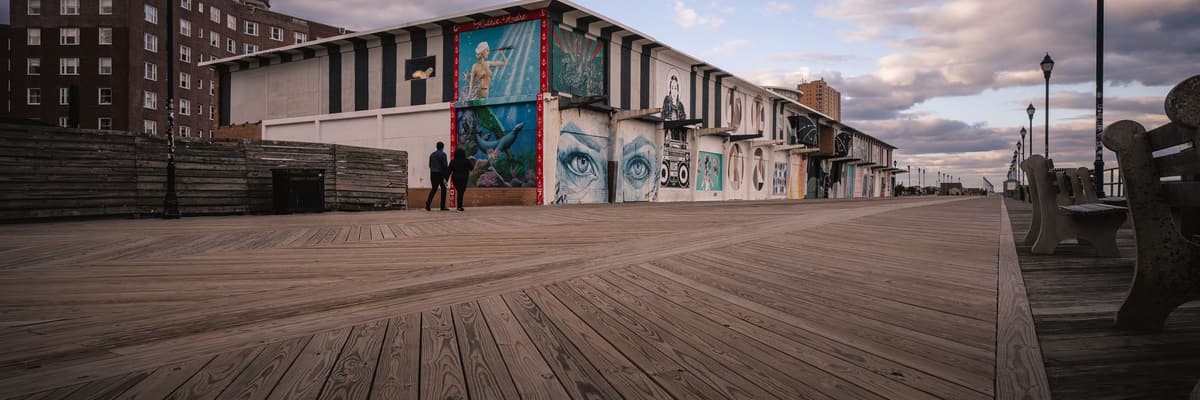
The boardwalk at Asbury Park, New Jersey, with murals on a beachfront building and benches along the planks. The photograph opens the ranking of PsyD programs in New Jersey.

By APA area of accreditation, that is 2 clinical, 2 counseling, 1 combined clinical and school and 1 school programs. Public universities run four of them (Rutgers, The State University of New Jersey, William Paterson University and Kean University).

New Jersey lets supervised experience come before the doctorate, so no postdoctoral year is required. Pay here runs above the national median: BLS reports $127,090 for clinical and counseling psychologists in New Jersey, against $100,580 nationwide (May 2025).

PsyD Programs in New Jersey at a Glance

  • Six PsyD programs in New Jersey are ranked. Each holds current APA accreditation and takes new students, and Rutgers, The State University of New Jersey is first in New Jersey at 7th nationally. How the programs are scored.
  • New Jersey does not require a postdoctoral year. Any part of the 3,500 supervised hours can be earned before the doctorate, and the exams are the EPPP and a short jurisprudence test.
  • Clinical and counseling psychologists in New Jersey earn a median of $127,090. That is BLS pay for SOC 19-3033 in May 2025, with the 10th to 90th percentile running from $57,180 to $224,050.
  • The median first-time EPPP pass rate is 72%. It is the median across the six programs with a published ASPPB rate, against 75% for all accredited doctoral programs.

Top PsyD Programs in New Jersey

The five highest-ranked PsyD programs in New Jersey, in order. The number on each card is its place in New Jersey, and its national rank is beside the school.

Rank 2

Rutgers, The State University of New Jersey (program page for its Psy.D. in School Psychology)

Piscataway, NJ · School Psychology · No. 26 nationally

64.2

$23,040
per semester, 2026-2027, out-of-state
76%
94 first-time takers
62%
40 of 65 applicants
5
2025-2026 graduates

Counted as $46,080 a year

Ranks 2nd: 62% of its 65 registered applicants matched to an accredited internship (higher than 4 of 5 other programs in New Jersey); it registers about 13 students a year in the APPIC internship match; and it retains 97% of the students who enter.

Factor scores, out of 10

  • Cost 2.7
  • Completion 9.5
  • Outcomes 4.6
  • Track record 4.8
  • Credential 10.0
  • Reputation 10.0

Rutgers' school psychology PsyD in Piscataway, New Jersey, prepares psychologists to work with children and youth in schools and other community settings under a practitioner-scholar model.

Read More on Rutgers, The State University of New Jersey Show less on Rutgers, The State University of New Jersey

The program follows the practitioner-scholar model, which places primary emphasis on delivering psychological services and on evaluating and improving them, and it stresses data-based decision making in practice. Practicum is integrated with coursework: a three-semester practicum sequence begins in the second semester of the first year and continues through the second year, and students register for 150 hours of practicum that include 30 hours of advanced supervision at GSAPP. The program publishes four-year and five-year model course sequences for students entering in fall 2026 and after.

Applicants need a bachelor's or master's degree, preferably in psychology, plus required prerequisite courses, and the school psychology program does not require the General or Psychology GRE. Practicum experiences take place in public schools and other settings such as counseling centers, psychological clinics and pediatric settings. GSAPP describes its programs as primarily self-funded, with limited funding opportunities for students.

  • The GRE is not required for admission to the school psychology program.
  • The practicum sequence runs three semesters, starting in the second semester of the first year.
  • Students register for 150 hours of practicum, including 30 hours of advanced supervision at GSAPP.
  • The program offers four-year and five-year model course sequences for students entering in fall 2026 and after.
APA area
School Psychology
Program unit
Graduate School of Applied & Professional Psychology
APA number
41
Accredited since
April 1, 1977
Next site visit
2033
Entry
bachelor's or master's degree
GRE
not required
Length
four-year or five-year model course sequence
Tuition, in-state
$13,680 per semester (first-year cohort, 2026-2027)
Tuition, out-of-state
$23,040 per semester (first-year cohort, 2026-2027)
University fees
$1,378 per semester
EPPP
75.53% of 94 first-time takers passed (ASPPB)
Internship match
40 of 65 applicants matched to an APA- or CPA-accredited internship (APPIC)

Scored under methodology v2.0

Sources: APA record of Rutgers, The State University of New Jersey (School Psychology), ASPPB, APPIC and APA disclosure of Rutgers, The State University of New Jersey (School Psychology), read October 12, 2026.

Rank 3

Saint Elizabeth University’s Psy.D. page in Counseling Psychology

Morristown, NJ · Counseling Psychology · No. 44 nationally · On campus

58.1

$20,214
first-year cohort, 2026-2027
22%
27 first-time takers
18%
5 of 28 applicants
4
2025-2026 graduates

Ranks 3rd: it publishes tuition of $20,214 for the first-year cohort (the lowest in New Jersey), but 18% of its 28 registered applicants matched to an accredited internship (the lowest in New Jersey).

Factor scores, out of 10

  • Cost 9.1
  • Completion 8.1
  • Outcomes 0.5
  • Track record 2.1
  • Credential 10.0
  • Reputation 2.1

Saint Elizabeth University's post-master's counseling Psy.D. in Morristown, New Jersey, is a four-year, full-time cohort program whose classes meet on campus on Tuesday and Thursday evenings, with training centered on social justice and work with marginalized populations.

Read More on Saint Elizabeth University Show less on Saint Elizabeth University

Saint Elizabeth University's Psy.D. in Counseling Psychology is a full-time, 97-credit, cohort-based program that trains general practitioner-scholars for careers in health service psychology; it specializes in preparing mental health professionals committed to working with marginalized populations, with social justice as its foundational value. Courses run in the fall, spring and summer, and the program typically takes 4 years, including coursework, practicum training, a dissertation and a full-time pre-doctoral internship. Beginning in the fall of the second year, students complete at least four semester-long doctoral practica in two different practicum experiences, each section requiring at least 300 hours on site, 120 of them in direct client service, with at least one hour a week of supervision by a licensed psychologist. Students must complete and defend a doctoral dissertation, using a qualitative, quantitative or mixed methods design.

Applicants must have completed a master's degree, typically in counseling, clinical or counseling psychology, social work, marriage and family therapy or another mental health field; 15 credits of master's courses are accepted in transfer toward the 97 required, GRE scores are optional, and application materials are due December 15, 2026, with selected applicants invited to interview with Psy.D. faculty. Recent cohorts have held 7 to 14 students. Classes meet on campus on Tuesday and Thursday evenings, and many students keep part-time jobs, especially in the first year, though practicum placements from the second year call for about two full days a week. Tuition and fees in effect when a cohort begins stay unchanged as it progresses, and the program says funding through graduate assistantships is very limited.

  • The curriculum totals 97 credits, 15 of them transferred from the master's degree.
  • Applicants must hold a master's degree.
  • GRE scores are optional.
  • Classes meet on campus on Tuesday and Thursday evenings.
  • The program is not offered part time.
APA area
Counseling Psychology
Program unit
Psychology
APA number
2328
Accredited since
April 5, 2020
Next site visit
2033
Schedule
full-time
Entry
master's degree
GRE
optional
Length
typically 4 years, including coursework, practicum training, the dissertation and a full-time pre-doctoral internship
Credits
97 credits
Tuition, full-time
$20,214 (first-year cohort, 2026-2027)
University fees
$300
EPPP
22.22% of 27 first-time takers passed (ASPPB)
Internship match
5 of 28 applicants matched to an APA- or CPA-accredited internship (APPIC)

Scored under methodology v2.0

Sources: APA record of Saint Elizabeth University (Counseling Psychology), ASPPB, APPIC and APA disclosure of Saint Elizabeth University (Counseling Psychology), read October 12, 2026.

Rank 4

William Paterson University’s Psy.D. page in Clinical Psychology

Wayne, NJ · Clinical Psychology · No. 75 nationally

49.8

76%
33 first-time takers
59%
27 of 46 applicants
5
2025-2026 graduates

Ranks 4th: 76% of its 33 first-time EPPP takers passed (higher than 4 of 5 other programs in New Jersey), but it retains 91% of the students who enter (lower than 3 of 4 other programs in New Jersey).

Factor scores, out of 10

  • Completion 6.1
  • Outcomes 4.4
  • Track record 3.7
  • Credential 10.0
  • Reputation 3.1

William Paterson University's Psy.D. in clinical psychology in Wayne, New Jersey, is a full-time, five-year practitioner-scholar program built around three milestone projects (a Second Year Project, a Comprehensive Examination and a Doctoral Dissertation) with faculty research labs from the first semester.

Read More on William Paterson University Show less on William Paterson University

William Paterson University's Doctor of Psychology in Clinical Psychology is a full-time, five-year practitioner-scholar program that integrates academic coursework, supervised clinical training and research experience, with training in evidence-based assessment, intervention, consultation and supervision. Students complete 96 credits, join faculty research labs from the first semester, and pass three milestone projects: a Second Year Project, a Comprehensive Examination and a Doctoral Dissertation. Community practicum begins in the fall of the second year and totals at least 1,800 hours of supervised clinical training, about 600 hours a year for three years, in settings such as hospitals, community mental health clinics and correctional facilities. In the final year students complete a year-long, full-time doctoral internship and take part in the APPIC match.

Applicants need a bachelor's degree, the program's five prerequisite psychology courses (developmental psychology, statistics, research methods, abnormal psychology and physiological psychology or an equivalent) and a minimum undergraduate GPA of 3.0 or graduate GPA of 3.50, and an in-person or virtual interview is required; the GRE is no longer required. Students complete four years of full-time study plus one year of internship, while students admitted with William Paterson's own M.A. in clinical and counseling psychology enter with advanced standing, and up to 32 graduate credits may be transferred. Graduate assistantships, which for PsyD students are half-time positions with a partial tuition waiver and a stipend, go to select students, and students with a master's degree may teach as adjunct faculty for partial tuition remission. The program notes that graduates who wish to become licensed psychologists must also pass a national examination and meet state licensing requirements.

  • The program totals 96 credits.
  • Practicum requires at least 1,800 hours of supervised clinical training, about 600 hours a year for three years.
  • Students complete a Second Year Project, a Comprehensive Examination and a Doctoral Dissertation.
  • The final year is a year-long, full-time doctoral internship.
  • The GRE is no longer required for admission.
APA area
Clinical Psychology
Program unit
Psychology Department, Graduate Program in Clinical Psychology
APA number
2136
Accredited since
April 15, 2018
Next site visit
2031
Schedule
full-time
Entry
bachelor's degree
GRE
not required
Length
five years: four years of full-time study plus a one-year doctoral internship
Credits
96 credits
Tuition, in-state
$980 per credit (first-year cohort, 2026-2027)
Tuition, out-of-state
$1,428 per credit (first-year cohort, 2026-2027)
University fees
$20 per credit
EPPP
75.76% of 33 first-time takers passed (ASPPB)
Internship match
27 of 46 applicants matched to an APA- or CPA-accredited internship (APPIC)

Scored under methodology v2.0
Sources: APA record of William Paterson University (Clinical Psychology), ASPPB, APPIC and APA disclosure of William Paterson University (Clinical Psychology), read October 14, 2026.

Rank 5

Kean University’s page for the Psy.D. in Clinical and School Psychology

Union, NJ · Clinical and School Psychology · No. 77 nationally

49.2

$40,672
first-year cohort, 2026-2027
69%
49 first-time takers
60%
32 of 53 applicants
5
2025-2026 graduates

Ranks 5th: 60% of its 53 registered applicants matched to an accredited internship (higher than 3 of 5 other programs in New Jersey), and it registers about 11 students a year in the APPIC internship match, but it retains 87% of the students who enter (the lowest in New Jersey).

Factor scores, out of 10

  • Cost 3.7
  • Completion 3.2
  • Outcomes 3.7
  • Track record 4.1
  • Credential 10.0
  • Reputation 4.5

Kean University's Psy.D. in Union, New Jersey, combines school and clinical psychology in one program, with externships in a K-12 school setting in the second year and a clinical setting in the third year.

Read More on Kean University Show less on Kean University

Kean's Psy.D. in Combined School and Clinical Psychology is based on the practitioner-scholar model and combines education and training across the two practice areas of school psychology and clinical psychology. It is a 5-year, full-time program of 121 graduate credits that must be completed within 6 years of entry, and students are awarded a master's degree en route to the PsyD. Beginning in the second year, students see clients through Kean Psychological Services, and all students complete externships in a K-12 school setting in the second year and a clinical setting in the third year, with an optional externship in year four. Students pass the Foundations Examination and the Assessment and Intervention Competency Examinations and complete a doctoral dissertation, and the program ends with an approved internship of at least 1,750 hours in school or clinical psychology, one year full time or two years part time, which students typically find through a national match process.

The program is intended for students who have completed a bachelor's degree in psychology or a related field and for those who hold a master's degree in a mental health discipline; the application deadline is December 1, there is no spring admission, and each entering class is limited to approximately 12 students. Students are expected to keep pace with their cohort, and enrolling on a part-time schedule requires the program director's written approval. A limited number of doctoral assistantships cover all tuition and fees for four years of training in exchange for 15 to 20 hours of on-campus work, and research-grant and teaching assistantships may also be available. Kean says graduates will be eligible for New Jersey certification as a school psychologist and will have met the educational requirements for licensure as a psychologist in New Jersey; licensure itself is granted by each state's board.

  • The program totals 121 graduate credits.
  • Each entering class is limited to approximately 12 students.
  • The internship requires at least 1,750 hours.
  • The application deadline is December 1, with no spring admission.
  • A limited number of doctoral assistantships cover all tuition and fees for four years.
APA area
Combined, Clinical-School Psychology
Program unit
Psy.D. Program in Combined School and Clinical Psychology
APA number
2037
Accredited since
March 4, 2016
Next site visit
2035
Schedule
full-time
Entry
bachelor's or master's degree
Length
five years full time, to be completed within six years of entry
Credits
121 credits
Tuition, full-time
$40,672 (first-year cohort, 2026-2027)
University fees
$6,223
EPPP
69.39% of 49 first-time takers passed (ASPPB)
Internship match
32 of 53 applicants matched to an APA- or CPA-accredited internship (APPIC)

Scored under methodology v2.0

Sources: APA record of Kean University (Clinical and School Psychology), ASPPB, APPIC and APA disclosure of Kean University (Clinical and School Psychology), read October 14, 2026.

Rank 6 in New Jersey, Compared in One Table

The 6th-place PsyD program in New Jersey
RankProgramAPA areaLocationScoreEPPP pass rate
Rank 6Felician University’s doctorate page for the Counseling Psychology Psy.D. programCounseling PsychologyLodi, NJ45.10%

The Numbers Behind the New Jersey Ranking

The figures below come from the six PsyD programs in New Jersey that this ranking includes, each read from the source named beside it.

  • 6

    APA-accredited PsyD programs ranked in New Jersey

    APA directory
  • 72%

    Median first-time EPPP pass rate across 6 programs

    ASPPB
  • 60%

    Median accredited internship match rate across 6 programs

    APPIC
  • $35,000

    Median yearly tuition across 3 programs

    Program disclosures

Across the six programs with a published first-time EPPP pass rate, results run from 0% to 94%, with a median of 72%. ASPPB reports 75% for all accredited doctoral programs.

The six programs with at least 10 APPIC registrations from 2021 to 2025 matched 18% to 99% of their registered applicants with APA- or CPA-accredited internships, with a median of 60%.

Three programs list a yearly tuition, from $20,214 to $40,672, with a median of $35,000. Each figure is the full-time yearly tuition in the program’s own cost table. Rutgers, The State University of New Jersey ($13,680 per semester, in-state) prints its tuition by the term rather than the year, so it sits outside that range.

ASPPB adds its own caution: “Please note that care should be exercised if comparisons across schools and programs are made.”

Psychologist Licensure in New Jersey

A PsyD is a degree, and the license comes from the state. These are the rules a graduate of PsyD programs in New Jersey meets for a license there, each linked to the page it was read on.

Licensing questionNew Jersey’s answer
Doctoral degree and accreditation
An earned doctorate (PhD, PsyD or EdD) in psychology or a field allied to psychology from a regionally accredited institutionThe program must be accredited by APA or CPA, listed by the ASPPB and National Register joint designation, or meet the board’s faculty and on-campus attendance criteria. Source: New Jersey State Board of Psychological Examiners, FAQ, read October 14, 2026
Supervised experience
Two years of full-time supervised practice, totaling 3,500 hoursAny part of the experience can be completed before the doctorate. The board counts 2,000 client contact hours, 400 supervision hours and 1,100 hours of related work. Source: New Jersey State Board of Psychological Examiners, FAQ, read October 14, 2026
Licensing examinations
The EPPP and the board’s jurisprudence examinationThe jurisprudence examination is online, with 25 true-or-false questions on New Jersey’s psychology laws and regulations. Source: New Jersey State Board of Psychological Examiners, online orientation, read October 14, 2026

Licensing board: New Jersey State Board of Psychological Examiners.

Psychologist Pay in New Jersey

BLS counts 2,700 clinical and counseling psychologists in New Jersey, with a median annual wage of $127,090. School psychologists number 2,130 at a median of $95,160.

Clinical and Counseling Psychologists in New Jersey

$127,090

Median annual pay for clinical and counseling psychologists in New Jersey

  • BLS OEWS, May 2025
10th percentile
$57,180
25th percentile
$64,780
75th percentile
$166,490
90th percentile
$224,050

Occupation: Clinical and Counseling Psychologists, SOC 19-3033.BLS counts 2,700 employed in New Jersey.

Clinical and Counseling Psychologists Pay by Area in New Jersey

Median annual pay for clinical and counseling psychologists in New Jersey and its metropolitan and nonmetropolitan areas, BLS May 2025
AreaMedian annual pay
New Jersey statewide 2,700 employed $127,090
Trenton-Princeton, NJ 120 employed $128,850
New York-Newark-Jersey City, NY-NJ 8,170 employed $120,510
Philadelphia-Camden-Wilmington, PA-NJ-DE-MD 1,920 employed $112,690
Allentown-Bethlehem-Easton, PA-NJ 180 employed $88,360

School Psychologists in New Jersey

$95,160

Median annual pay for school psychologists in New Jersey

  • BLS OEWS, May 2025
10th percentile
$72,700
25th percentile
$80,670
75th percentile
$110,880
90th percentile
$127,910

Occupation: School Psychologists, SOC 19-3034.BLS counts 2,130 employed in New Jersey.

School Psychologists Pay by Area in New Jersey

Median annual pay for school psychologists in New Jersey and its metropolitan and nonmetropolitan areas, BLS May 2025
AreaMedian annual pay
New Jersey statewide 2,130 employed $95,160
New York-Newark-Jersey City, NY-NJ 7,890 employed $117,540
Allentown-Bethlehem-Easton, PA-NJ 150 employed $91,930
Atlantic City-Hammonton, NJ 80 employed $91,720
Vineland, NJ 40 employed $84,370
Philadelphia-Camden-Wilmington, PA-NJ-DE-MD 1,690 employed $82,190

Percentiles are points in each occupation’s pay distribution, not experience levels. BLS lists an area in every state its counties reach, so a metropolitan area that crosses a state line appears under each state.

Questions About a PsyD in New Jersey

Which Is the Best PsyD Program in New Jersey?

In the 2027 ranking, Rutgers, The State University of New Jersey in Piscataway, New Jersey is first among the PsyD programs in New Jersey, with a score of 73.5 out of 100 and 7th place nationally. Its program page is Rutgers, The State University of New Jersey (Psy.D. program page in Clinical Psychology). The score weighs cost, graduate earnings, completion, internship and licensure outcomes, track record, credential alignment and program reputation, and the methodology page shows each weight.

What Does a PsyD Cost in New Jersey?

Three ranked programs in New Jersey list a yearly tuition, from $20,214 to $40,672, with a median of $35,000. Each figure is the full-time yearly tuition in the program’s own cost table. Rutgers, The State University of New Jersey ($13,680 per semester, in-state) prints its tuition by the term rather than the year, so it sits outside that range. A program card labels its tuition figure with the period and rate its school printed, and Read More lists the in-state and out-of-state prices where the cost table gives both.

Does New Jersey Require an APA-Accredited PsyD?

APA accreditation is one route. The board’s FAQ says the doctoral program must be accredited by APA or CPA, listed by the ASPPB and National Register joint designation, or have doctorally prepared full-time faculty and an on-campus attendance requirement. The degree rests on at least 40 credit hours in psychology.

Does New Jersey Require a Postdoctoral Year for Psychologists?

No. Since P.L.2020, c.134, any portion of the two years of professional experience can be completed before the doctoral degree is awarded.

Which Exams Does a New Jersey Psychologist Take?

Two: the written EPPP, then the board’s jurisprudence examination. An oral exam is no longer part of licensure, and the board’s FAQ describes it as a past requirement.

What Do Psychologists Earn in New Jersey?

BLS reports a median annual wage of $127,090 for clinical and counseling psychologists (SOC 19-3033) in New Jersey for May 2025. The 10th percentile is $57,180 and the 90th is $224,050. School psychologists (SOC 19-3034) have a median of $95,160. Percentiles mark points in the pay distribution of everyone in the occupation, not years of experience.

Sources for New Jersey PsyD Programs