Skip to Content
PsyDPrograms

2027 Edition

Find a Program

Best PsyD Programs in California (2027)

Choosing among PsyD programs in California means weighing 18 APA-accredited options across 16 cities. Palo Alto University in Palo Alto, California is the top-ranked of the PsyD programs in California, 5th nationally at 73.7 out of 100.

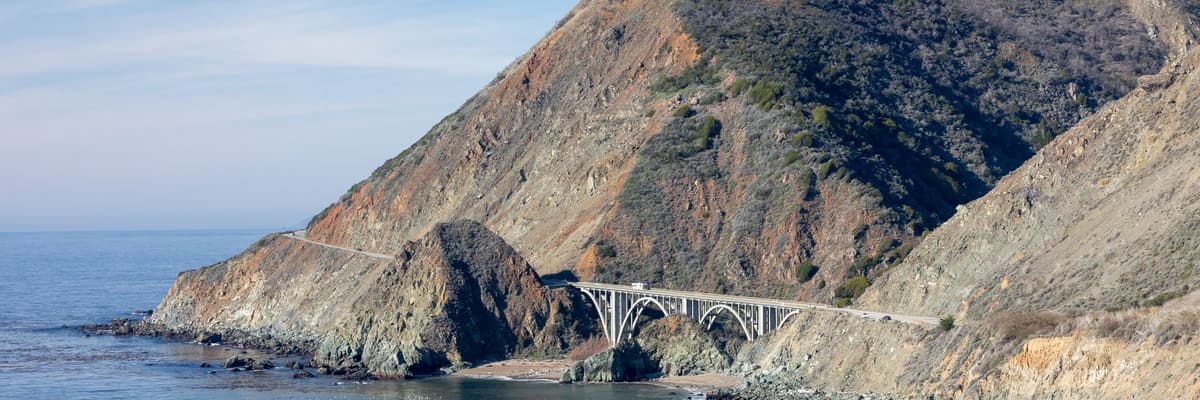
Big Creek Bridge arching across a canyon on the Big Sur coast of California, with the Pacific Ocean beyond. The photograph opens the ranking of PsyD programs in California.

All 18 are clinical psychology programs in APA’s accreditation list. Every one is at a private institution.

California’s degree rule turns on the degree field and the school’s regional accreditation, not on APA accreditation, and the board decides whether each degree qualifies. Pay here runs above the national median: BLS reports $116,000 for clinical and counseling psychologists in California, against $100,580 nationwide (May 2025). School psychologists earn more, at $127,780.

PsyD Programs in California at a Glance

  • 18 PsyD programs in California are ranked. Each holds current APA accreditation and takes new students, and Palo Alto University is first in California at 5th nationally. How the programs are scored.
  • California’s degree rule does not name APA accreditation. It asks for 3,000 supervised hours, the EPPP and the state’s own laws and ethics exam.
  • Clinical and counseling psychologists in California earn a median of $116,000. That is BLS pay for SOC 19-3033 in May 2025, with the 10th to 90th percentile running from $62,900 to $188,050.
  • The median first-time EPPP pass rate is 64%. It is the median across the 15 programs with a published ASPPB rate, against 75% for all accredited doctoral programs.
  • APA lists Mount Saint Mary's University as “Accredited, on contingency”. Its card shows that exact status.

Top PsyD Programs in California

The five highest-ranked PsyD programs in California, in order. The number on each card is its place in California, and its national rank is beside the school.

Rank 2

The Wright Institute’s Doctor of Psychology page in Clinical Psychology

Berkeley, CA · Clinical Psychology · No. 13 nationally

70.0

$45,600
first-year cohort, 2026-2027
73%
289 first-time takers
84%
271 of 322 applicants
5
2025-2026 graduates

Ranks 2nd: it registers about 64 students a year in the APPIC internship match (the most in California); it retains 94% of the students who enter; and 73% of its 289 first-time EPPP takers passed.

Factor scores, out of 10

  • Cost 2.8
  • Earnings 7.0
  • Completion 7.9
  • Outcomes 6.4
  • Track record 10.0
  • Credential 10.0
  • Reputation 8.9

The Wright Institute in Berkeley, California, runs a requirement-based PsyD on trimesters, with clinical practica in all three years of academic residency and optional focus areas that add electives, a related practicum and dissertation research.

Read More on The Wright Institute Show less on The Wright Institute

The Wright Institute's PsyD in Clinical Psychology follows a fixed, sequential curriculum that is requirement based rather than unit based, with students expected to take four courses each trimester. Coursework spans three years of academic residency, and students are in clinical practica in all three years, tied to their classes through the Case Conference/Professional Development Seminar sequence. A qualifying examination comes in the spring of the second year, students work to complete the dissertation in the fourth year, and the internship is completed in the fifth year. The school names faculty strengths in contemporary psychoanalytic, cognitive behavioral, family systems, social justice, brief treatment and relational approaches.

Applicants need a bachelor's degree from a regionally accredited U.S. school by the start of classes and three prerequisite courses, including human development and abnormal psychology, which can be completed after admission; GRE scores are optional. Students with prior graduate coursework may be able to waive required courses, but waived coursework does not shorten the program because of the three-year residency requirement. The Institute admits students each year for the fall trimester at its campus in Berkeley, California. Focus areas range from psychodynamic and cognitive behavioral therapy training to child assessment, neuropsychological assessment, health psychology, first responder psychology and community and multicultural practice, and the Wright Institute Scholarship assists students with financial need.

  • The curriculum is requirement based, not unit based, on a trimester calendar.
  • Students are in clinical practica in all three years of academic residency.
  • GRE scores are optional.
  • Each focus area adds electives, a related practicum and dissertation research, and completers receive a certificate of completion.
  • The Wright Institute Scholarship assists students with financial need.
APA area
Clinical Psychology
Program unit
Psy.D. Program
APA number
247
Accredited since
March 10, 1998
Next site visit
2027
Schedule
full-time
Entry
bachelor's degree
GRE
optional
Length
a three-year residency, then the fourth and fifth years for the dissertation and internship
Tuition, full-time
$45,600 (first-year cohort, 2026-2027)
University fees
$0
EPPP
72.66% of 289 first-time takers passed (ASPPB)
Internship match
271 of 322 applicants matched to an APA- or CPA-accredited internship (APPIC)

Scored under methodology v2.0

Sources: APA record of The Wright Institute (Clinical Psychology), ASPPB, APPIC and APA disclosure of The Wright Institute (Clinical Psychology), read October 12, 2026.

Rank 3

Loma Linda University’s Doctor of Psychology page in Clinical Psychology

Loma Linda, CA · Clinical Psychology · No. 20 nationally

66.3

$36,000
first-year cohort, 2026-2027
71%
17 first-time takers
96%
78 of 81 applicants
5
2025-2026 graduates

Ranks 3rd: 96% of its 81 registered applicants matched to an accredited internship (the highest in California); it publishes tuition of $36,000 for the first-year cohort; and it retains 90% of the students who enter.

Factor scores, out of 10

  • Cost 4.6
  • Completion 5.4
  • Outcomes 7.8
  • Track record 5.6
  • Credential 10.0
  • Reputation 8.8

Loma Linda University's practitioner-scholar PsyD in Loma Linda, California, offers clinical child, health psychology and neuropsychology specializations as well as a generalist path, and places students in supervised clinical settings from the end of the first year, including Loma Linda University Medical Center.

Read More on Loma Linda University Show less on Loma Linda University

The Clinical Psychology (PsyD) program is influenced by the practitioner-scholar model, and the school describes it as about two-thirds clinical preparation and one-third research training. Students complete 122 units of core, specialization, elective and doctoral research coursework, including required courses in spirituality and clinical psychology and in wholeness and health, plus 80 units of practicum, pre-internship and internship, and students can specialize in clinical child psychology, health psychology or neuropsychology or follow a generalist path. Supervised clinical work starts at the end of the first year, continues with individuals, couples and families in the psychology clinic during the second year, and moves to Loma Linda University Medical Center and community settings in years 3 and 4; the comprehensive examination currently includes the Examination for Professional Practice in Psychology, and a doctoral project with a formal proposal and a public defense comes before the one-year pre-doctoral internship.

The program's preferred criteria for an admission interview include a bachelor's degree in psychology or a related discipline and an undergraduate GPA of 3.0 or higher or a master's degree GPA of 3.3 or higher; the GRE is not required but may be submitted, and the department requires a structured pre-admission interview. New students start only in the fall quarter, application materials are due December 1, and the program is designed for five years of full-time enrollment, including the internship. Loma Linda University is a Seventh-day Adventist-affiliated university: students agree to uphold its values, and those with classes on campus attend a weekly chapel service, though students need not be church members. Funding beyond loans is limited and competitive; the department gives typically 6-8 partial tuition remission awards to first-year students, and teaching assistants are typically paid hourly through Federal Work Study.

  • The degree requires 122 units of coursework and doctoral research, and practicum, pre-internship and internship add 80 units.
  • The comprehensive examination currently includes the Examination for Professional Practice in Psychology (EPPP).
  • The school notes that graduates must complete post-doctoral clinical training to become eligible for state licensure.
  • Training grants have supported students' clinical training in areas such as health psychology and primary care, neuropsychology and clinical child psychology.
  • A fourth letter of recommendation from a religious leader is optional for applicants.
APA area
Clinical Psychology
Program unit
Clinical Psychology Psy.D. Program, Department of Psychology
APA number
1055
Accredited since
November 13, 1998
Next site visit
2029
Schedule
full-time
Entry
bachelor's degree
GRE
optional
Length
5-year program (including internship)
Credits
122 units
Tuition, full-time
$36,000 (first-year cohort, 2026-2027)
University fees
$4,902
EPPP
70.59% of 17 first-time takers passed (ASPPB)
Internship match
78 of 81 applicants matched to an APA- or CPA-accredited internship (APPIC)

Scored under methodology v2.0

Sources: APA record of Loma Linda University (Clinical Psychology), ASPPB, APPIC and APA disclosure of Loma Linda University (Clinical Psychology), read October 12, 2026.

Rank 4

Fuller Theological Seminary’s Doctor of Psychology page in Clinical Psychology

Pasadena, CA · Clinical Psychology · No. 23 nationally

65.5

$37,020
first-year cohort, 2026-2027
85%
40 first-time takers
85%
52 of 61 applicants
5
2025-2026 graduates

Ranks 4th: 85% of its 40 first-time EPPP takers passed (higher than 13 of 14 other programs in California); it publishes tuition of $37,020 for the first-year cohort; and its school's doctoral graduates in this field earn a median $106,857, four years after completing.

Factor scores, out of 10

  • Cost 4.4
  • Earnings 7.8
  • Completion 4.7
  • Outcomes 7.4
  • Track record 4.6
  • Credential 10.0
  • Reputation 8.2

A seminary-based PsyD in Pasadena, California, whose 242-unit curriculum includes 28 units of theology and 20 units on integrating psychology and theology, with Neuropsychology and Culture and Community tracks.

Read More on Fuller Theological Seminary Show less on Fuller Theological Seminary

Fuller's Doctor of Psychology in Clinical Psychology uses the practitioner-scholar model to train professionals to provide psychotherapy and assessment services and to develop, implement and evaluate treatment programs. Clinical training runs year by year: sessions with client actors in the first year, a caseload of around ten clients at the in-house clinic in the second, a year-long assessment clerkship at one of 80 training sites in the greater Los Angeles County area of California in the third, a year-long pre-internship practicum in the fourth, and a one-year internship in the fifth. Each student is placed in a faculty research lab to complete a dissertation.

Applicants submit official transcripts showing a bachelor's degree, essays including a religious autobiography, a CV and four references, one pastoral and three academic; applicants with a bachelor's or master's degree in psychology or a closely related field and a GPA of at least 3.0 need no further prerequisite coursework, and the GRE is not required. Requests to transfer a prior master's degree or courses are evaluated individually after matriculation. Admitted students agree that continual adherence to the seminary's Statements of Community Standards is a condition of enrollment, and students earn a Master of Arts in Psychology after completing 88 selected units.

  • The curriculum totals 242 units, including 86 units of field training
  • Students earn a Master of Arts in Psychology after completing 88 selected units
  • The third-year clerkship places students at one of 80 training sites in Los Angeles County, California
  • The GRE is not required, though applicants may submit scores
  • Fuller describes the PsyD as a 5 year program
APA area
Clinical Psychology
Program unit
Graduate School of Psychology
APA number
207
Accredited since
December 5, 1972
Next site visit
2028
Entry
bachelor's or master's degree
GRE
optional
Length
5 year program, ending with a one-year internship
Credits
242 units
Tuition, full-time
$37,020 (first-year cohort, 2026-2027)
University fees
$660
EPPP
85% of 40 first-time takers passed (ASPPB)
Internship match
52 of 61 applicants matched to an APA- or CPA-accredited internship (APPIC)

Scored under methodology v2.0
Sources: APA record of Fuller Theological Seminary (Clinical Psychology), ASPPB, APPIC and APA disclosure of Fuller Theological Seminary (Clinical Psychology), read October 12, 2026.

Rank 5

Alliant University, San Diego (Doctor of Psychology page in Clinical Psychology)

San Diego, CA · Clinical Psychology · No. 30 nationally · On campus

63.7

$48,160
first-year cohort, 2026-2027
52%
236 first-time takers
88%
230 of 263 applicants
4
2025-2026 graduates

Ranks 5th: it registers about 53 students a year in the APPIC internship match (more than 16 of 17 other programs in California), and 88% of its 263 registered applicants matched to an accredited internship.

Factor scores, out of 10

  • Cost 2.4
  • Earnings 7.6
  • Completion 5.2
  • Outcomes 4.4
  • Track record 9.8
  • Credential 10.0
  • Reputation 9.4

Alliant's Psy.D. in San Diego, California, takes four years of full-time study in a practitioner-scholar model, and students can add an emphasis or experience area ranging from clinical health and family/child psychology to trauma-focused forensic work and Buddhist psychotherapy.

Read More on Alliant University, San Diego Show less on Alliant University, San Diego

Part of the California School of Professional Psychology, the program follows a practitioner-scholar model that emphasizes the application of theory and research to clinical practice. Entering students spend ten hours a week at a practicum agency, second- and third-year practica are chosen from a list of pre-approved sites, and the fourth year is a full-time internship; every student must apply to at least 11 APA-accredited internships. Proposal development and clinical dissertation groups lead to an applied clinical dissertation, and students take a written and oral Clinical Proficiency Examination in the spring of the third year.

Applicants need a bachelor's degree from a regionally accredited institution, a GPA of at least 3.0 or a GPA exemption petition, and preparation in psychology through a psychology degree, an 80th percentile or better score on the GRE Psychology Test, or four prerequisite courses. The 120-unit degree is taught on the ground on a semester calendar at the San Diego, California, campus, up to 30 units of earlier graduate psychology work can transfer, and students complete 40 hours of personal psychotherapy. The school says its doctoral course requirements are designed to fulfill the programmatic requirements for licensure in California.

  • The degree requires 120 units: 90 academic units and 30 internship units.
  • The catalog lists the program's modality as on-ground, on a semester calendar.
  • Every student applies to at least 11 APA-accredited internships.
  • Students complete 40 hours of personal psychotherapy.
  • Students who pursue an emphasis area may need units beyond the 120 the degree requires.
APA area
Clinical Psychology
Program unit
Clinical PsyD Program
APA number
287
Accredited since
May 26, 1994
Next site visit
2035
Schedule
full-time
Entry
bachelor's degree
Length
four years of full-time study, including a one-year full-time internship typically in the fourth year
Credits
120 units
Tuition, full-time
$48,160 (first-year cohort, 2026-2027)
University fees
$840
EPPP
52.12% of 236 first-time takers passed (ASPPB)
Internship match
230 of 263 applicants matched to an APA- or CPA-accredited internship (APPIC)

Scored under methodology v2.0

Sources: APA record of Alliant University, San Diego (Clinical Psychology), ASPPB, APPIC and APA disclosure of Alliant University, San Diego (Clinical Psychology), read October 12, 2026.

Ranks 6 Through 18 in California, Compared in One Table

The Numbers Behind the California Ranking

The figures below come from the 18 PsyD programs in California that this ranking includes, each read from the source named beside it.

  • 18

    APA-accredited PsyD programs ranked in California

    APA directory
  • 64%

    Median first-time EPPP pass rate across 15 programs

    ASPPB
  • 74%

    Median accredited internship match rate across 17 programs

    APPIC
  • $44,032

    Median yearly tuition across 17 programs

    Program disclosures

Across the 15 programs with a published first-time EPPP pass rate, results run from 21% to 97%, with a median of 64%. ASPPB reports 75% for all accredited doctoral programs.

The 17 programs with at least 10 APPIC registrations from 2021 to 2025 matched 35% to 96% of their registered applicants with APA- or CPA-accredited internships, with a median of 74%.

17 programs list a yearly tuition, from $33,320 to $83,400, with a median of $44,032. Each figure is the full-time yearly tuition in the program’s own cost table.

ASPPB adds its own caution: “Please note that care should be exercised if comparisons across schools and programs are made.”

Psychologist Licensure in California

A PsyD is a degree, and the license comes from the state. These are the rules a graduate of PsyD programs in California meets for a license there, each linked to the page it was read on.

Licensing questionCalifornia’s answer
Doctoral degree and accreditation
A doctorate in psychology, education or a field built for professional practice, from a regionally accredited schoolThe statute names the degree field and regional accreditation and never names APA accreditation. The board makes the final decision on whether a degree qualifies. Source: California Business and Professions Code 2914, read October 12, 2026
Supervised experience
3,000 hours, in two years of 1,500 hours eachAt least one of the two years must come after the doctorate. Up to 1,500 hours can be earned before it, once 48 semester or 72 quarter units of graduate coursework are complete. Source: California Code of Regulations, title 16, section 1387, read October 14, 2026
Licensing examinations
The EPPP and the California Psychology Laws and Ethics Examination (CPLEE)The CPLEE has 100 multiple-choice questions on laws and ethics, 75 of them scored. Source: Board of Psychology licensee FAQ, read October 14, 2026
EPPP Part 2 (Skills)
Not requiredThe board stopped its rulemaking for a two-part EPPP after ASPPB rescinded the mandate that was to start in 2026. Source: Board of Psychology, EPPP Part 2 page, read October 14, 2026

Licensing board: California Board of Psychology.

Psychologist Pay in California

BLS counts 12,840 clinical and counseling psychologists in California, with a median annual wage of $116,000. School psychologists number 8,340 at a median of $127,780.

Clinical and Counseling Psychologists in California

$116,000

Median annual pay for clinical and counseling psychologists in California

  • BLS OEWS, May 2025
10th percentile
$62,900
25th percentile
$77,050
75th percentile
$162,360
90th percentile
$188,050

Occupation: Clinical and Counseling Psychologists, SOC 19-3033.BLS counts 12,840 employed in California.

Clinical and Counseling Psychologists Pay by Area in California

Median annual pay for clinical and counseling psychologists in California and its metropolitan and nonmetropolitan areas, BLS May 2025
AreaMedian annual pay
California statewide 12,840 employed $116,000
San Francisco-Oakland-Fremont, CA 1,540 employed $166,400
San Luis Obispo-Paso Robles, CA 90 employed $155,960
Sacramento-Roseville-Folsom, CA 630 employed $153,050
Hanford-Corcoran, CA 40 employed $147,210
Vallejo, CA 180 employed $143,600
Eastern Sierra-Mother Lode Region of California nonmetropolitan area 30 employed $138,830
Stockton-Lodi, CA 160 employed $129,860
Fresno, CA 280 employed $129,120
Modesto, CA 70 employed $123,030
North Valley-Northern Mountains Region of California nonmetropolitan area 40 employed $122,330
Oxnard-Thousand Oaks-Ventura, CA 300 employed $116,960
Santa Rosa-Petaluma, CA 200 employed $116,620
Bakersfield-Delano, CA 180 employed $116,550
Santa Cruz-Watsonville, CA 60 employed $112,860
San Jose-Sunnyvale-Santa Clara, CA 590 employed $102,710
Santa Maria-Santa Barbara, CA 150 employed $102,120
North Coast Region of California nonmetropolitan area 80 employed $100,390
Visalia, CA 70 employed $99,580
Los Angeles-Long Beach-Anaheim, CA 4,790 employed $99,250
Salinas, CA 90 employed $98,430
Riverside-San Bernardino-Ontario, CA 1,130 employed $92,730
San Diego-Chula Vista-Carlsbad, CA 1,650 employed $72,090

School Psychologists in California

$127,780

Median annual pay for school psychologists in California

  • BLS OEWS, May 2025
10th percentile
$97,200
25th percentile
$109,940
75th percentile
$140,980
90th percentile
$160,170

Occupation: School Psychologists, SOC 19-3034.BLS counts 8,340 employed in California.

School Psychologists Pay by Area in California

Median annual pay for school psychologists in California and its metropolitan and nonmetropolitan areas, BLS May 2025
AreaMedian annual pay
California statewide 8,340 employed $127,780
El Centro, CA 50 employed $145,400
Riverside-San Bernardino-Ontario, CA 760 employed $139,400
Merced, CA 90 employed $133,230
North Coast Region of California nonmetropolitan area 50 employed $131,980
Sacramento-Roseville-Folsom, CA 460 employed $131,920
San Diego-Chula Vista-Carlsbad, CA 850 employed $131,070
San Francisco-Oakland-Fremont, CA 680 employed $130,540
San Jose-Sunnyvale-Santa Clara, CA 260 employed $130,520
Oxnard-Thousand Oaks-Ventura, CA 220 employed $129,610
Modesto, CA 100 employed $128,750
Stockton-Lodi, CA 200 employed $128,630
Santa Maria-Santa Barbara, CA 110 employed $128,110
Visalia, CA 170 employed $128,020
Santa Rosa-Petaluma, CA 70 employed $126,710
Bakersfield-Delano, CA 170 employed $126,430
Yuba City, CA 40 employed $125,860
Chico, CA 50 employed $124,980
Fresno, CA 400 employed $123,920
San Luis Obispo-Paso Robles, CA 30 employed $122,450
Los Angeles-Long Beach-Anaheim, CA 3,060 employed $122,390
Vallejo, CA 80 employed $121,340
North Valley-Northern Mountains Region of California nonmetropolitan area 70 employed $114,110

Percentiles are points in each occupation’s pay distribution, not experience levels. BLS lists an area in every state its counties reach, so a metropolitan area that crosses a state line appears under each state.

Programs APA Lists in California That Are Not Ranked

APA lists these programs in California, and they are not ranked. The statement for each is quoted below with the page it was read on.

Questions About a PsyD in California

Which Is the Best PsyD Program in California?

In the 2027 ranking, Palo Alto University in Palo Alto, California is first among the PsyD programs in California, with a score of 73.7 out of 100 and 5th place nationally. Its program page is Palo Alto University’s program page for its Psy.D. in Clinical Psychology. The score weighs cost, graduate earnings, completion, internship and licensure outcomes, track record, credential alignment and program reputation, and the methodology page shows each weight.

What Does a PsyD Cost in California?

17 ranked programs in California list a yearly tuition, from $33,320 to $83,400, with a median of $44,032. Each figure is the full-time yearly tuition in the program’s own cost table. A program card labels its tuition figure with the period and rate its school printed, and Read More lists the in-state and out-of-state prices where the cost table gives both.

Does California Require an APA-Accredited PsyD?

No. California’s statute asks for an earned doctorate in a listed field from a regionally accredited school and never names APA accreditation, and the board makes the final decision on each degree. APA does appear in the board’s rules as one of three accepted credentials for a predoctoral internship, beside APPIC and CAPIC membership. See California Business and Professions Code 2914.

How Many Supervised Hours Does California Require for Psychologists?

California counts 3,000 hours of supervised professional experience, in two years of 1,500 hours each, with at least one year after the doctorate. The board’s regulation, title 16, section 1387, sets out the settings that count.

Which Exams Does a California Psychologist Take?

Two: the EPPP, which ASPPB writes, and the California Psychology Laws and Ethics Examination. The Board of Psychology licensee FAQ names both. The EPPP is the knowledge-based exam, and California is no longer implementing a two-part version.

What Do Psychologists Earn in California?

BLS reports a median annual wage of $116,000 for clinical and counseling psychologists (SOC 19-3033) in California for May 2025. The 10th percentile is $62,900 and the 90th is $188,050. School psychologists (SOC 19-3034) have a median of $127,780. Percentiles mark points in the pay distribution of everyone in the occupation, not years of experience.

Sources for California PsyD Programs